

There is a version of this program that would be easier to explain. It would have a donate button. It would show you a photograph and ask you to help. It would tell you, in real time, exactly where your money went, with a name and a face attached to it.
We are not building that version.
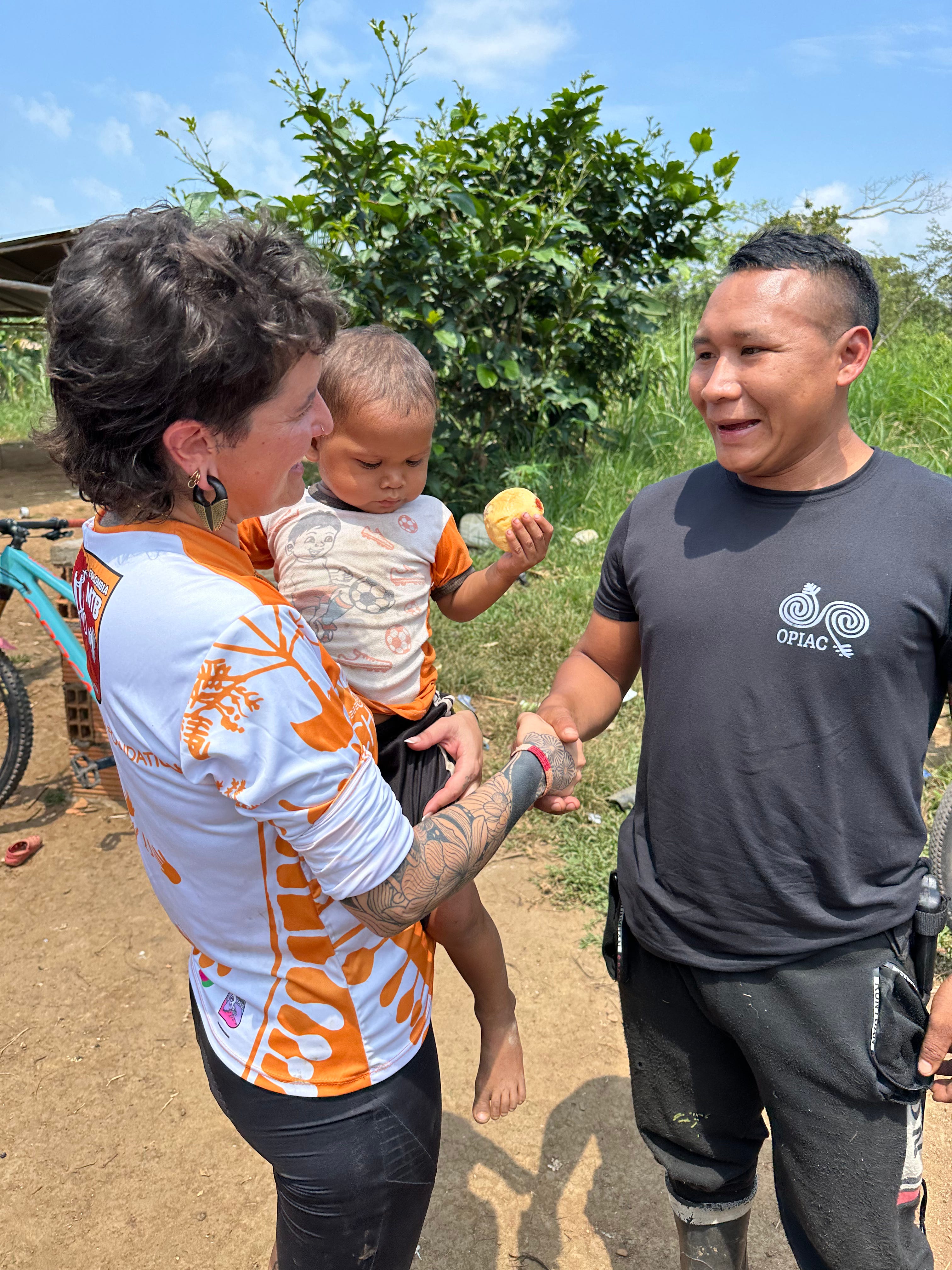
The Colombian Amazon Journal and ColombianAmazon.com are not charities. The Indigenous and local communities we work with are not beneficiaries, and they are not a cause. They are partners: leaders, artisans, guides, knowledge holders, and custodians of territories they have governed for thousands of years. Some of them we have known for years. All of them decide, on their own terms, what is useful to them.
That distinction is not a marketing position. It changes how this program actually works.
Partners decide what’s useful
We do not arrive somewhere and decide what a community needs. Needs come to us through relationships that already exist — a request for transportation, for training materials, for baby chicks and the materials to raise them, for a boat that makes a follow-up visit possible. The request comes from the community. We do not manufacture it, and we do not go looking for one to justify a program.
If a specific need is real, and if it can be met safely, it may be sponsored. That is different from a donation in a specific way: a donation asks you to give because someone is suffering. A sponsorship supports a defined piece of work that a partner has already decided is worth doing.
Membership and sponsorship are two different things
A Journal Membership sustains this publication — the reporting, the research, the translation, the editorial work that goes into telling this story honestly. It is a paid subscription to independent journalism, the same as any other publication you pay to read.
A Mission Partnership is a step further: it helps carry a greater share of what the underlying work actually costs — field relationships, mission preparation, transportation, coordination, documentation. Mission Partners may occasionally be told, privately, when a specific community-requested item or service becomes available to sponsor separately. That sponsorship is arranged on its own, outside the subscription, only when a genuine need exists.
Neither one is a donation. Neither one purchases anything from a community. A subscription does not entitle you to a visit, a photograph, a contact, or a say in how a mission is run. It finances work that is already happening, on terms the community already controls.
Why some of this stays private
Some of the territory this Journal covers is affected by armed groups, illegal economies, and territorial conflict that is very real and ongoing. Publishing exact dates, routes, locations, or the names of the people we work with would not make this program more accountable. It would make the people in it easier to find.
So the rule is simple: transparent with sponsors, discreet in the field, protective of communities. We document what we responsibly can. We do not endanger people to produce evidence for sponsors. Reporting is often delayed until a mission is complete and it is safe to share. Some details — who exactly was involved, where exactly something happened — may never become public at all.
That is not evasiveness. It is the actual shape of doing this work without getting someone hurt.
What accountability looks like instead
We do not tell sponsors that every dollar goes directly to a community, because it would not be true, and because it describes a fantasy version of how responsible work happens. Transportation, coordination, communication, purchasing, fieldwork, and follow-up are real, necessary parts of the cost — not overhead to apologize for.
What we can offer instead is a private, honest account of what a specific sponsorship covered, once it is safe to share it, and an annual accounting of the categories of work this program has supported. Not every name, date, and location. But enough for a Mission Partner to know the work was real, was requested, and was carried out with the seriousness it deserves.
What this is, plainly
This is a group of people who read this Journal, understand what it is actually trying to do, and want to help carry more of the real cost of doing it well. Some of you will simply subscribe. A smaller number of you will become Mission Partners, and occasionally be asked to help with something specific and concrete.
of you will become Mission Partners, and occasionally be asked to help with something specific and concrete.
Either way, you are not rescuing anyone. You are helping fund work that people who live in the Colombian Amazon have already decided is worth doing, on their own terms.
That is the whole program.
Marcel & Johana