
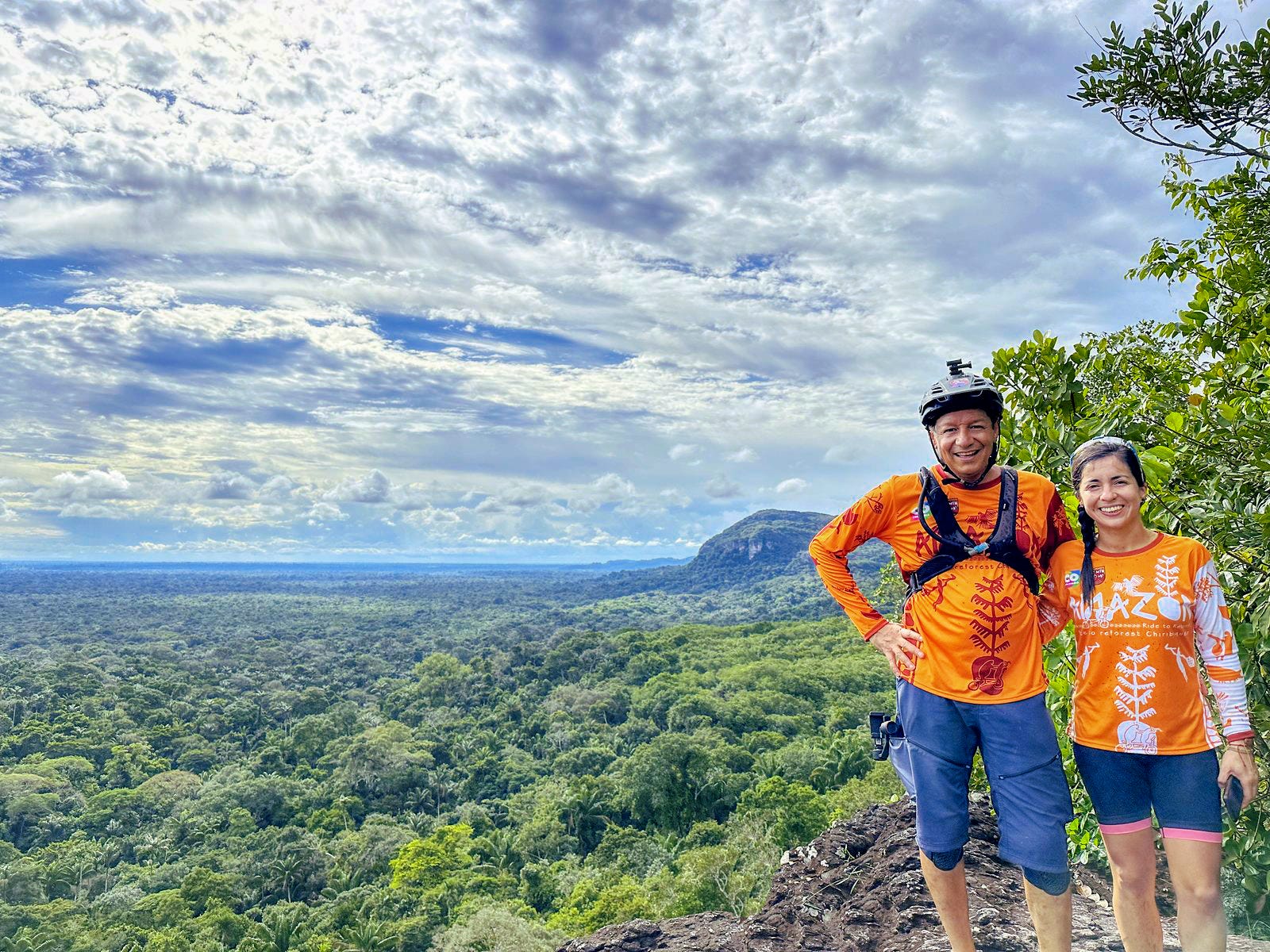
My wife, Johana, and I did not set out to build a publication, a cultural embassy, a botanical project, a restaurant, and an expedition company around the Colombian Amazon. There was no master strategy. No carefully designed “ecosystem.” There were bicycles, long roads, and people who changed the direction of our lives — one relationship at a time.
They welcomed us. Trusted us. Showed us parts of Colombia most travelers never see. Once that happened, we could not simply go home and continue as though we hadn’t seen what we’d seen.
That is why we do this.
The road that changed everything
Mountain Bike Colombia began with a love of bicycles and the landscapes of this country. Cycling takes you off the polished version of a place — past the airports and managed attractions, onto dirt roads, river crossings, and routes that connect communities most visitors never reach.
A bicycle slows you down. You feel the distance, notice the terrain, depend on local knowledge to get where you’re going. You stop passing through places and start encountering them.
Those journeys eventually took us into the Colombian Amazon and the territories surrounding it — not as an environmental issue, a tourism product, or a humanitarian cause, but as people. Community leaders, guides, artisans, mothers, elders, boat operators, families. We saw generosity, humor, resilience, and knowledge. We also saw something harder to look away from: the enormous gap between the value held inside these territories and the small amount of it that ever reaches the people who live there.
Biodiversity surrounded communities with limited economic opportunity. Ancestral knowledge was praised by outsiders and rarely compensated. Indigenous art was admired, photographed, copied, and resold while the artisans who made it stayed economically invisible. Communities were called helpless in the same breath as they governed territories, protected knowledge, and raised families under pressure most outsiders could not imagine.
Somewhere in that contradiction, the people we’d met stopped being distant. They became people whose names we knew — people who had trusted us with something. Trust like that does not stay neutral. It turns into responsibility, whether you planned for it or not.
That responsibility is where everything we are building began.
This is not about saving anyone
Here is what that responsibility is not: it is not rescue.
Johana and I do not believe the communities of the Colombian Amazon are waiting to be saved. They have been protecting forests, raising children, preserving languages, and governing their own resources for generations, long before anyone outside was watching. They are not without strength, ideas, or value. What they have been denied is fair recognition, fair compensation, and real control over what happens to what is theirs.
Resources leave. Knowledge leaves. Stories leave. Too little ever returns.
That is the pattern we refuse to repeat — which is why we reject charity as the foundation of this work. We are not interested in pity. We are interested in an artisan paid fairly for what they make. In Amazonian fruits and botanicals generating real, dignified income. In communities entering markets without surrendering ownership of their knowledge or identity. In visitors understanding they are guests in someone else’s territory, not customers with unlimited access.
We want the forest to be worth more standing, inhabited, and governed by its own people than it is burned, mined, or sold off in pieces. That is the whole objective: not rescue, but relationship, recognition, and fair exchange. Everything below is what that objective looks like when we actually try to build it.
Why Dulce Amazónica exists
Dulce Amazónica is where that principle first took physical shape. It is not simply an ice cream shop or an artisan store — we call it the Embassy of the Colombian Amazon because its purpose is to create a living connection between the Amazon and the people who visit Guatapé.
The wild-fruit ice creams introduce visitors to biodiversity they’ve likely never tasted. The artisanal work on our shelves represents real people, real traditions, real labor. But the heart of the Embassy is the Indigenous ambassadors who spend time with us — and they are not performers, and they are not curiosities set out for a touristic crowd to marvel at. They are ambassadors of their own nations, present in Guatapé on their own terms, carrying something most visitors will never otherwise encounter: a direct account of what is happening to their territory, told by someone who is actually living it.
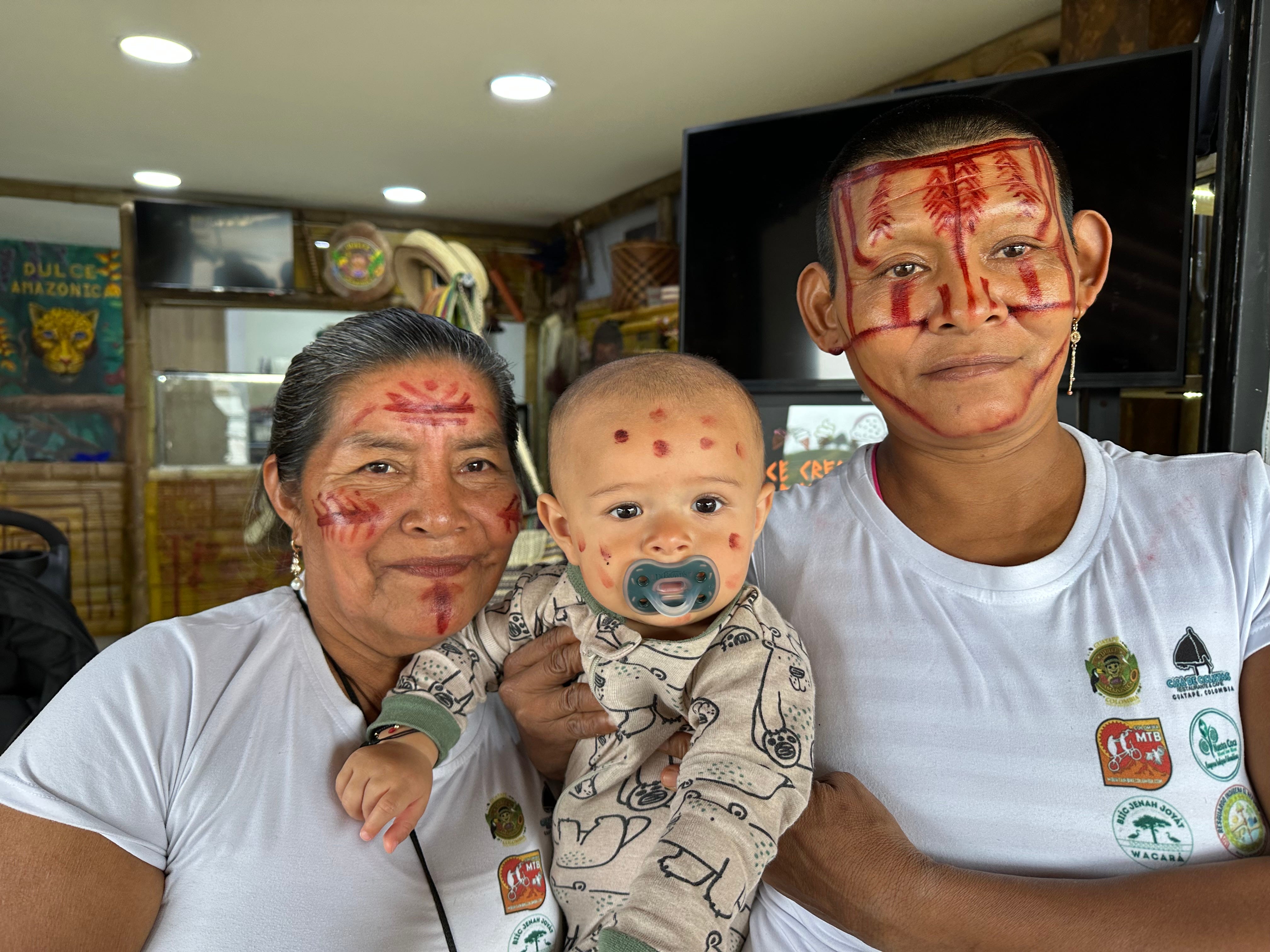
They are not there to be looked at. They are witnesses — to a destruction most of the world only sees in headlines, and to a resilience most of the world never sees at all. What they carry deserves more than a single afternoon in a shop. It deserves to be recorded, kept, and told honestly, for as long as they trust us to tell it. That is one of the reasons this Journal exists: to be the place where those stories do not disappear the moment a visitor walks back out the door.
So when people ask how they can help, we tell them the same thing every time: we don’t accept charity. If you want to contribute, purchase as much of their artisanal work as you’re moved to buy. Respect their work. Give them dignity. Respect their sovereignty and their ancestral wisdom. But above everything — keep it fair trade.
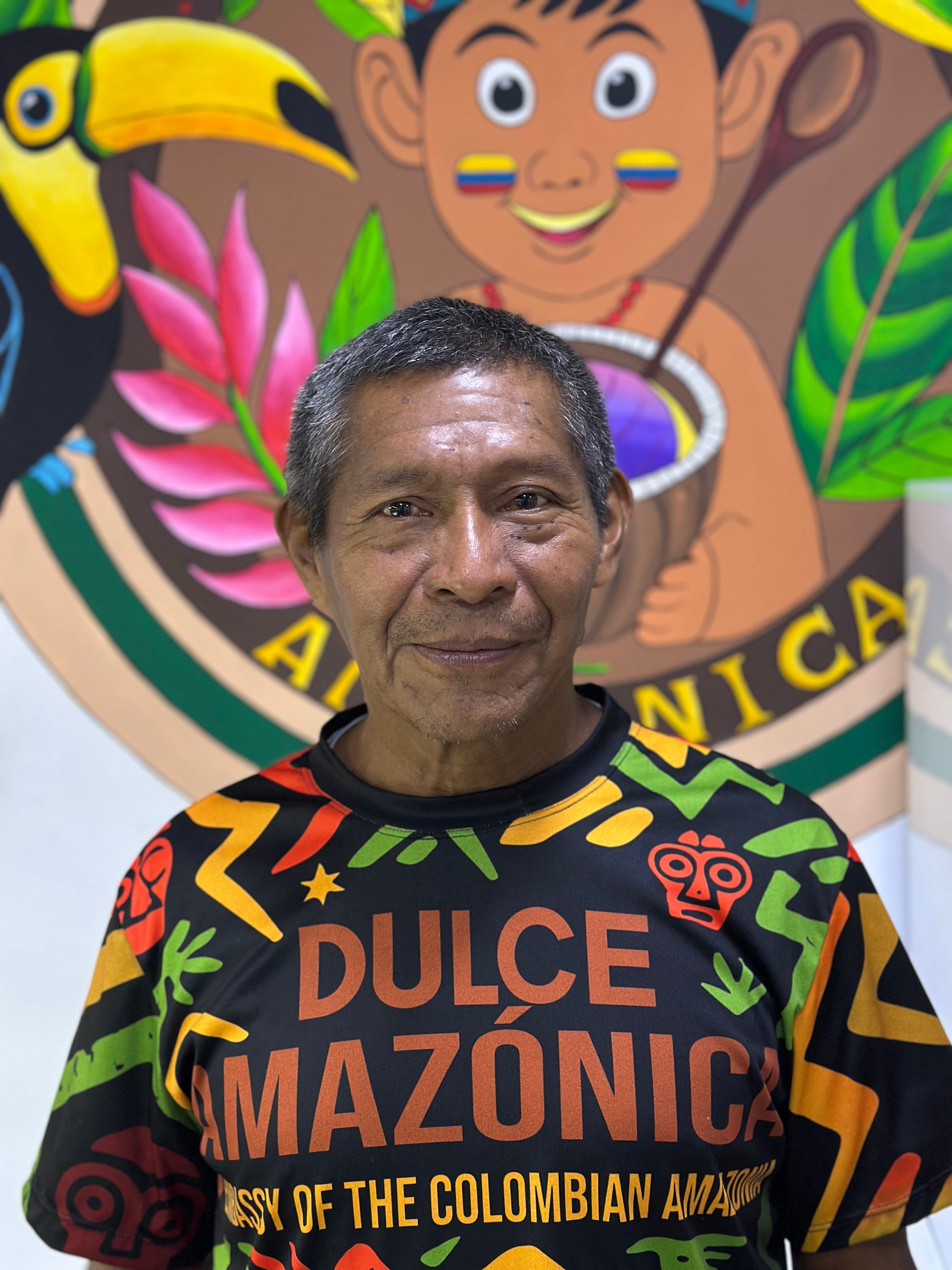
Not every community we work with makes artisanal goods, and their contribution is no less real for it. Some communities gather the wild fruits that become our ice creams, and the botanical ingredients that Origen Amazónica turns into health and cosmetic products. The principle does not change: they are paid fairly, on their own terms, for knowledge and labor built up over generations.
This Journal runs on the same principle. It is not a request for charity. It is another effort at earning your support the same way: by giving you something of real value in exchange, so that together we can help these communities help themselves.
Why our expeditions are different
The same relationships changed Mountain Bike Colombia itself. Our Amazon expeditions are not built around staged encounters or the promise that a paying visitor can see and photograph anything they want — because the Amazon does not run on a tourist schedule. Weather changes. Rivers change. Security changes. Community priorities change. And the people who live in these territories decide what visitors may see, where they may go, and what must stay private.
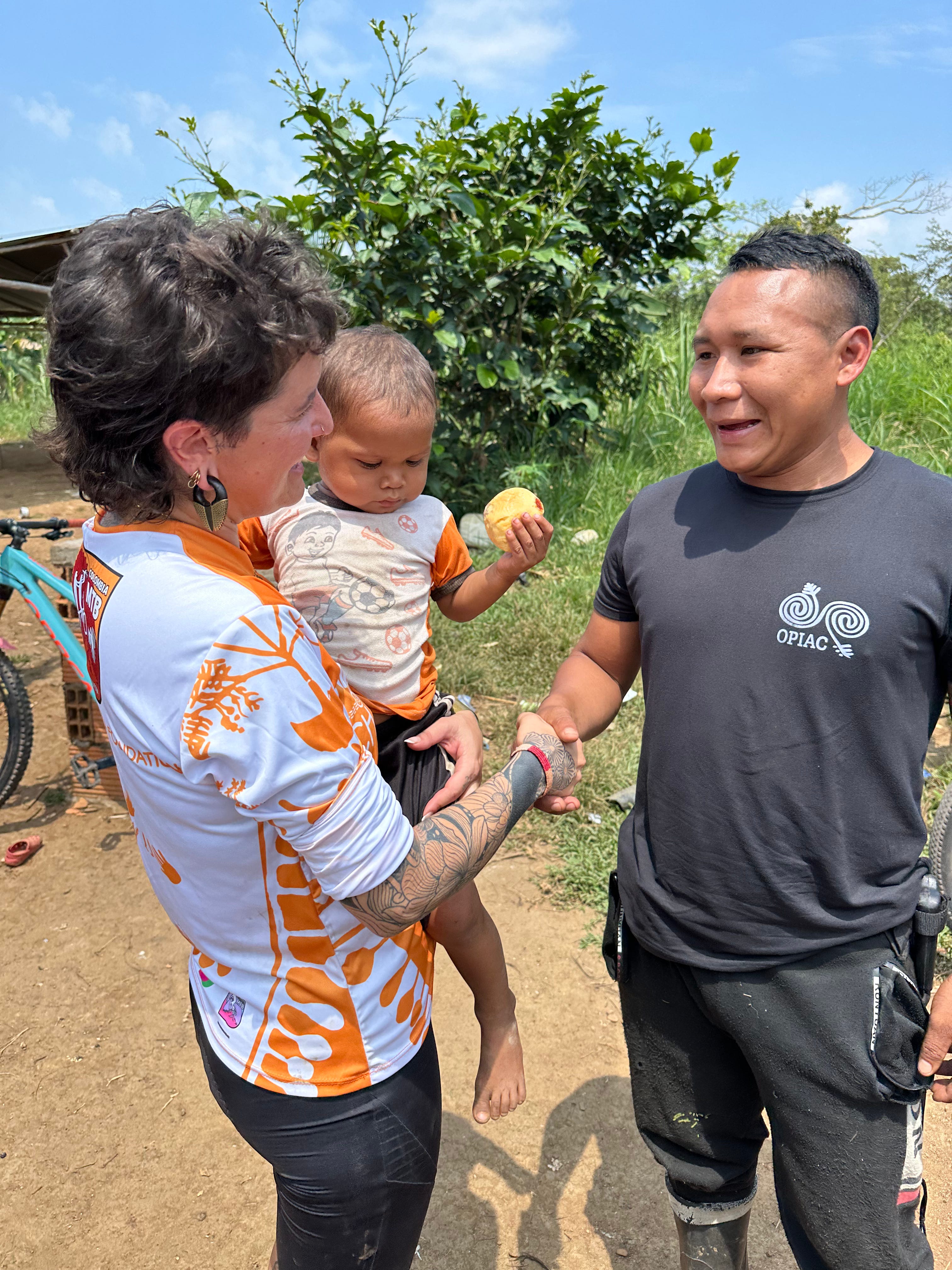
So our itineraries bend to the communities, not the other way around. Community decisions come before schedules. Security comes before sales. Permission comes before photographs. Participants arrive expecting to be guests, not heroes — asked to accept limits, and to listen more than they speak.
The bicycle matters here too. It slows the whole experience down, exposing riders to distance, heat, mud, and real dependence on the people who know the terrain. It is harder to treat a place as an abstract destination once you’ve felt what it costs to move through it. Every dollar these expeditions earn goes back into the work — the journey funds the mission it’s part of.
Why Casa de Ciclistas matters
Casa de Ciclistas, our restaurant and cycling hub in Guatapé, might look separate from all of this. It isn’t. It’s where these relationships meet the public — where travelers arrive, cyclists begin their journeys, and conversations start about Dulce Amazónica, the expeditions, and the communities behind them.
It gives us a physical place to practice hospitality, and to make the case that Colombia is more than a list of attractions — that it is a country of territories, histories, and living relationships. For a lot of people, Casa de Ciclistas is the first doorway into that conversation.
Why this Journal exists
Which brings us to the Journal — because everything above only matters if people understand what it’s responding to, and right now, the Amazon is badly misunderstood.
It gets told through one of three stories. Alarm: fires, deforestation, satellite images of loss. Wonder: wildlife, rivers, landscapes that read like spectacle. Rescue: outsiders arriving to save people who are framed as powerless. Each contains a piece of the truth. None of them is enough — alarm breeds helplessness, wonder turns a homeland into a backdrop, and rescue puts outsiders at the center of a story that was never about us.
We do not want to tell you a story about the Amazon. We want to tell you the story — what the Colombian Amazon actually looks like, in a specific place, on a specific day, to the people who live and work there. What are communities facing right now, and what are they doing about it? Who benefits from the roads, mines, and commercial projects entering the region? What does ethical trade produce in real numbers? What does responsible travel actually require? Where are we succeeding, and where are we failing? Those are the questions this Journal will follow.
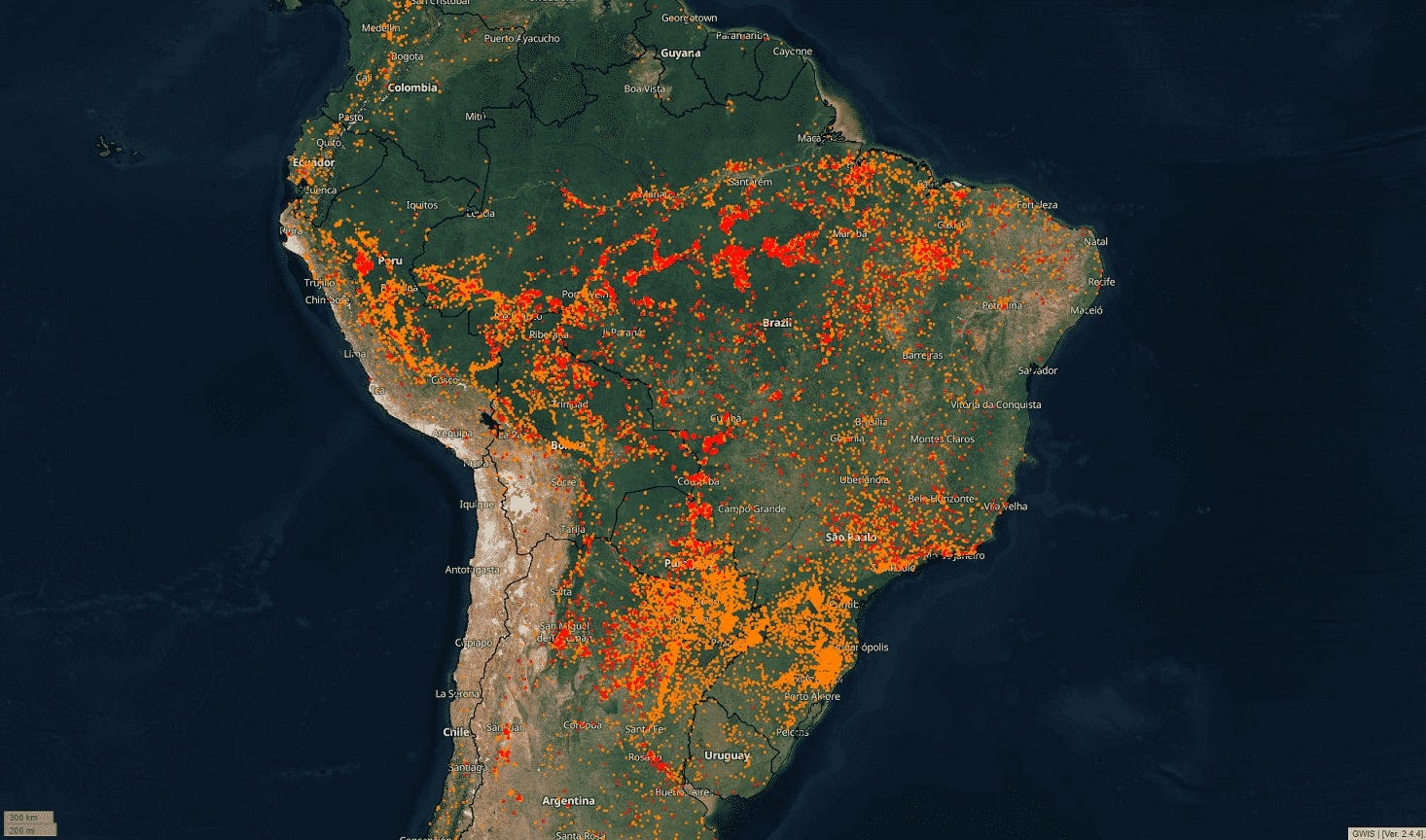
Every claim we make here is transparent — linked to its sources, drawn from trusted research and reporting across all nine countries that make up the entire Amazon: Bolivia, Brazil, Colombia, Ecuador, Guyana, Peru, Suriname, Venezuela, and French Guiana. Not a story. The story — the truth about the destruction actually taking place across the largest rainforest on Earth.
We will not turn trust into content
But there are limits to what we will publish, because trust is the whole foundation of this work, and we will not spend it carelessly.
We will not expose protected knowledge, identify vulnerable people or territories for the sake of a better story, publish private conversations, or photograph anyone without permission. Hospitality is not ownership of someone else’s story.
What transparency means, for us, is being honest about our own work: how our projects operate, what the money supports, what our relationships actually produce — including the complications, the disagreements, and the problems we haven’t solved yet. We will tell you what we find, not what a predetermined story requires us to find.
What we are building
Casa de Ciclistas, Mountain Bike Colombia, Dulce Amazónica, OriginAmazonica, ColombianAmazon.com, and this Journal are not separate projects stitched together for marketing. They are six answers to the same question: now that we know these people, now that we’ve seen what they’re carrying, what are we going to do about it?
We are trying to build a bridge — between Guatapé and the Amazon, between travelers and territories, between ancestral knowledge and commerce that actually respects it. We do this because dignity outlasts pity, because fair exchange is more durable than charity, and because the forest cannot be protected while the people protecting it are shut out of its value.
We do not do this because we believe we can change the direction of technology, or so-called civilization, or global politics. We do this because we are compelled by our hearts — witnesses to mankind’s destruction of the planet in the name of riches, power, and control. Destroying the Amazon to extract gold makes no sense to those who understand that the Amazon is the gold.
But mostly, we do this because Johana and I no longer think of the Colombian Amazon as a distant cause. We think of the people who shared meals with us, guided us, welcomed us, and trusted us — people to whom we’ve made commitments.
This Journal is how we intend to honor them.
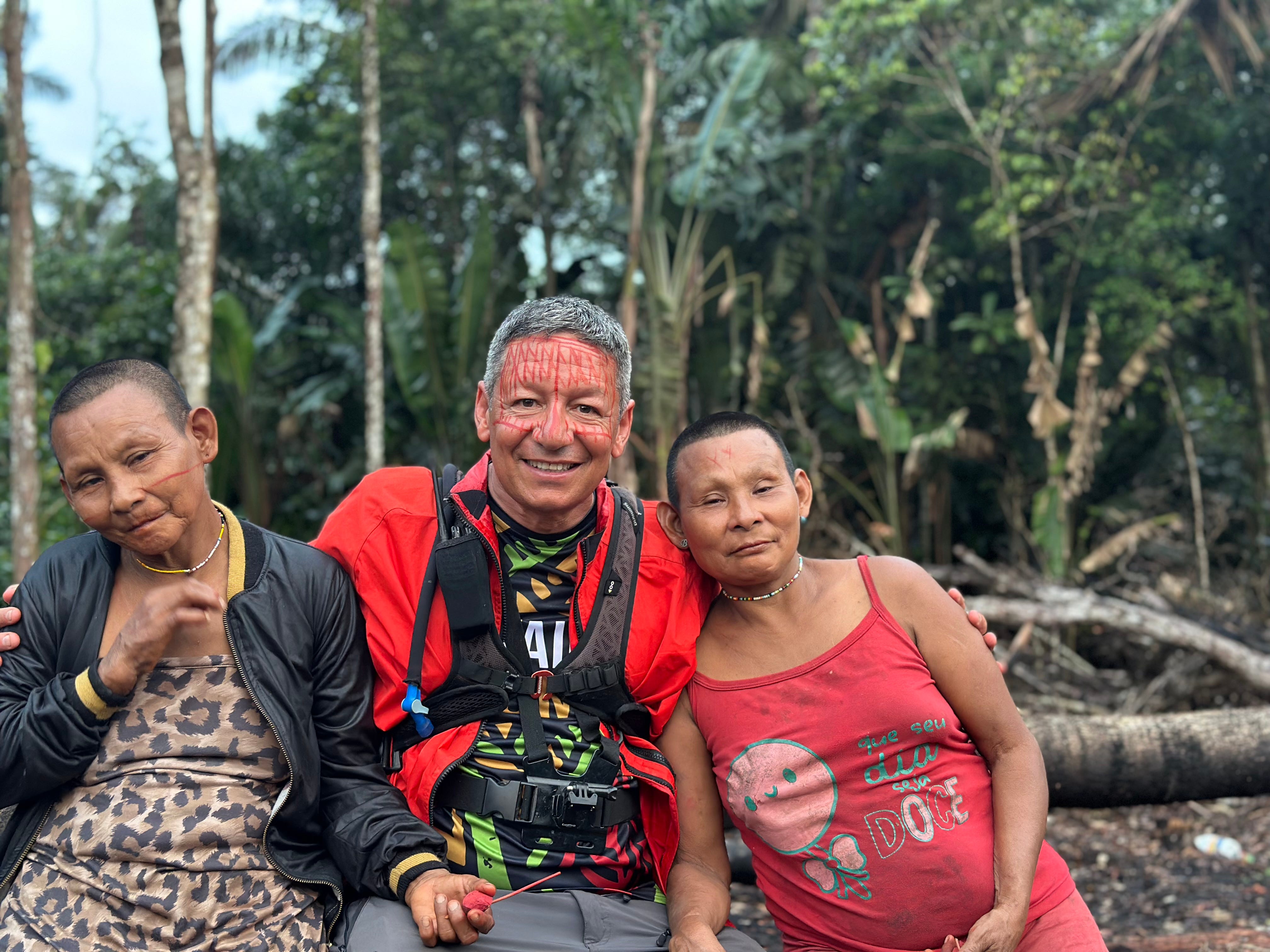
This is our first post. It is also our promise: we will tell you what we find, show you what the work produces, and be honest about what remains unresolved. We will never make this story about ourselves, because we’re not important.